◆AI/ML Researcher & Developer

U Saran
Raj.

Final-year B.Tech AI & Data Science student — studying not just how AI works, but where it breaks, why it fails, and how to make it trustworthy.

saran@portfolio
➜ whoami
u_saranraj · ai/ml researcher
➜ cat focus.txt
▸ model robustness
▸ fairness & bias audits
▸ RAG failure modes
▸ agentic safety
➜ statusavailable
Scroll
120
Day Challenge · Completed
10
Research Reports
9
Failure Modes Reproduced
25+
AI/ML Projects & Experiments
2
Internships
01Research Initiative

120 days inside AI's failure modes — completed.

A completed independent research challenge — not building more models, but understanding where they break, why they fail, and how to make them accountable. The reports below are its output.

"

The gap between a working model and a production-ready AI system is far larger than most tutorials acknowledge.

01Pillar

Data Science

Data robustness: data decay, missingness patterns, and proxy variable risks in real-world datasets.

02Pillar

Machine Learning

Model fragility: generalization gaps, distribution shift, and failure under edge cases.

03Pillar

Deep Learning

AI systems: neuron behaviour analysis and human-in-the-loop dynamics in deployed systems.

04Pillar

GenAI & Agents

Agentic safety: RAG failure modes, hallucination patterns, and autonomous agent safety constraints.

Independent Research

120-Day AI Research Challenge — Completed

Systematic decomposition of where models break

Completed an independent research challenge investigating failure modes in machine learning systems, including data drift, out-of-distribution behavior, feature sensitivity, robustness under perturbation, fairness, and the trade-offs between model complexity and practical performance. The challenge focused on testing assumptions, reproducing failure cases, examining evaluation results, and documenting what the experiments reveal about model reliability.

Failure AnalysisRobustnessBias AuditDistribution Shift
Completed
120-day challenge · reports on GitHub
View on GitHub ↗
Methodology
  • 01Isolated one failure mode per phase — no overlap, no skipping.
  • 02Reproduced every failure with minimal code so the break is visible.
  • 03Documented root cause, impact radius, and a concrete mitigation.
  • 04Cross-referenced against published literature and production incident reports.
Key Findings
  • ◆Statistical tripwires beat accuracy monitoring — KS tests (p = 0.00003) and PSI (0.168) flagged drift before performance collapsed; unmonitored decay cost +55.8% error.
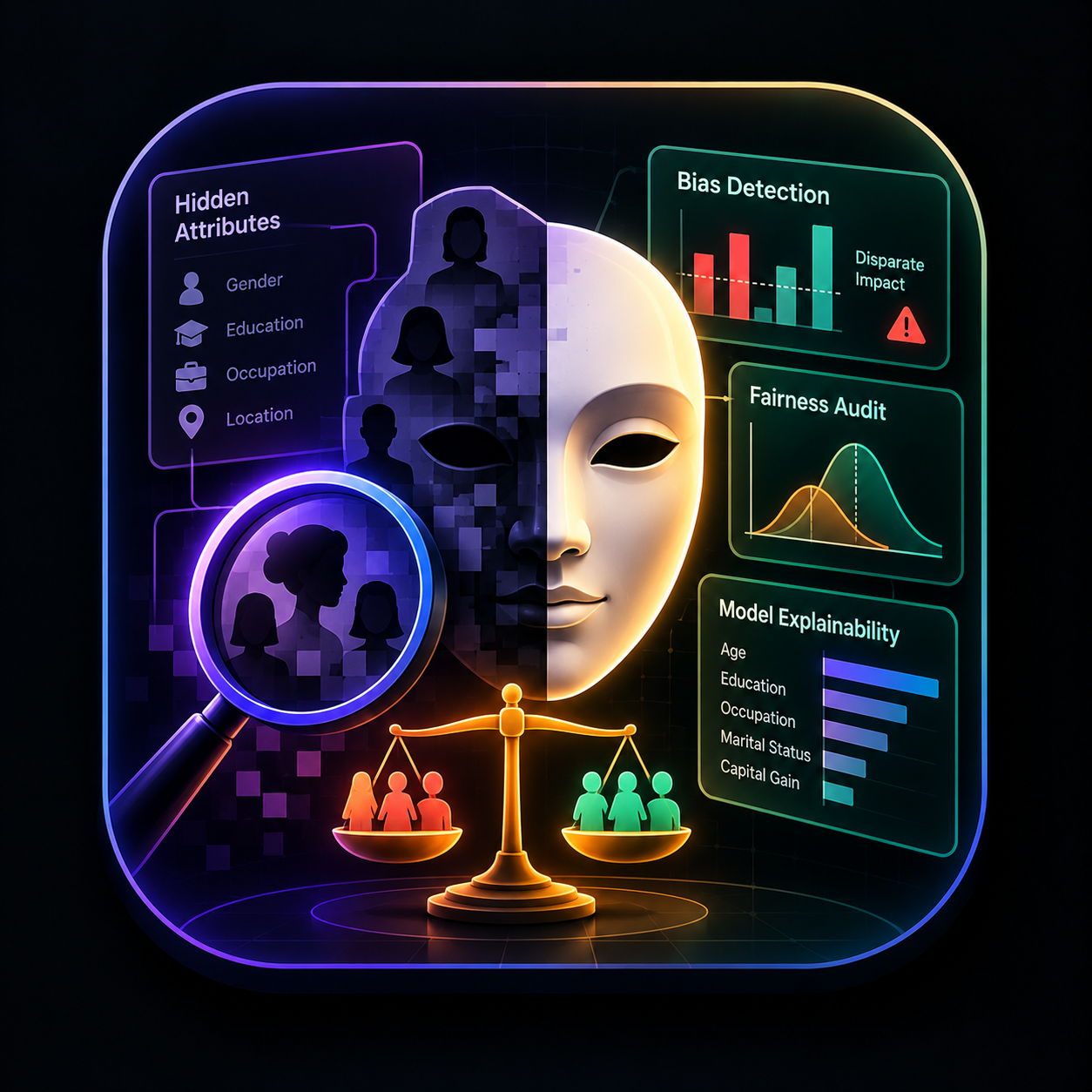
  • ◆Deleting protected attributes does not delete bias — a shadow model reconstructed hidden gender at AUC 0.94 from 'neutral' features like occupation and marital status.
  • ◆High accuracy can be memorization in disguise — a 1% input perturbation flipped 95.5% of predictions; longitude sensitivity hit Sf = 31 (1% noise → ~31% output swing).
  • ◆The model disagreed with a human expert heuristic in 57.7% of cases — accuracy is not cognitive alignment.
  • ◆Complexity has a tax — the high-capacity model was ~124,000× heavier and 26× slower than a linear baseline, and only justified itself after n = 250 training samples.
What the Audits Exposed
Prediction error under unmonitored data decay
Before$49,136 RMSE
After$76,566 RMSE
+55.8%
Out-of-distribution deployment error (trained North CA, tested South CA)
Before$29,450 MAE
After$98,110 MAE
3.3× worse
Corruption tolerance before operational failure (2× baseline RMSE)
Beforeassumed robust
Afterbroke at 5% corruption
outliers drove +180.7% error
02Selected Work

Systems built with intent.

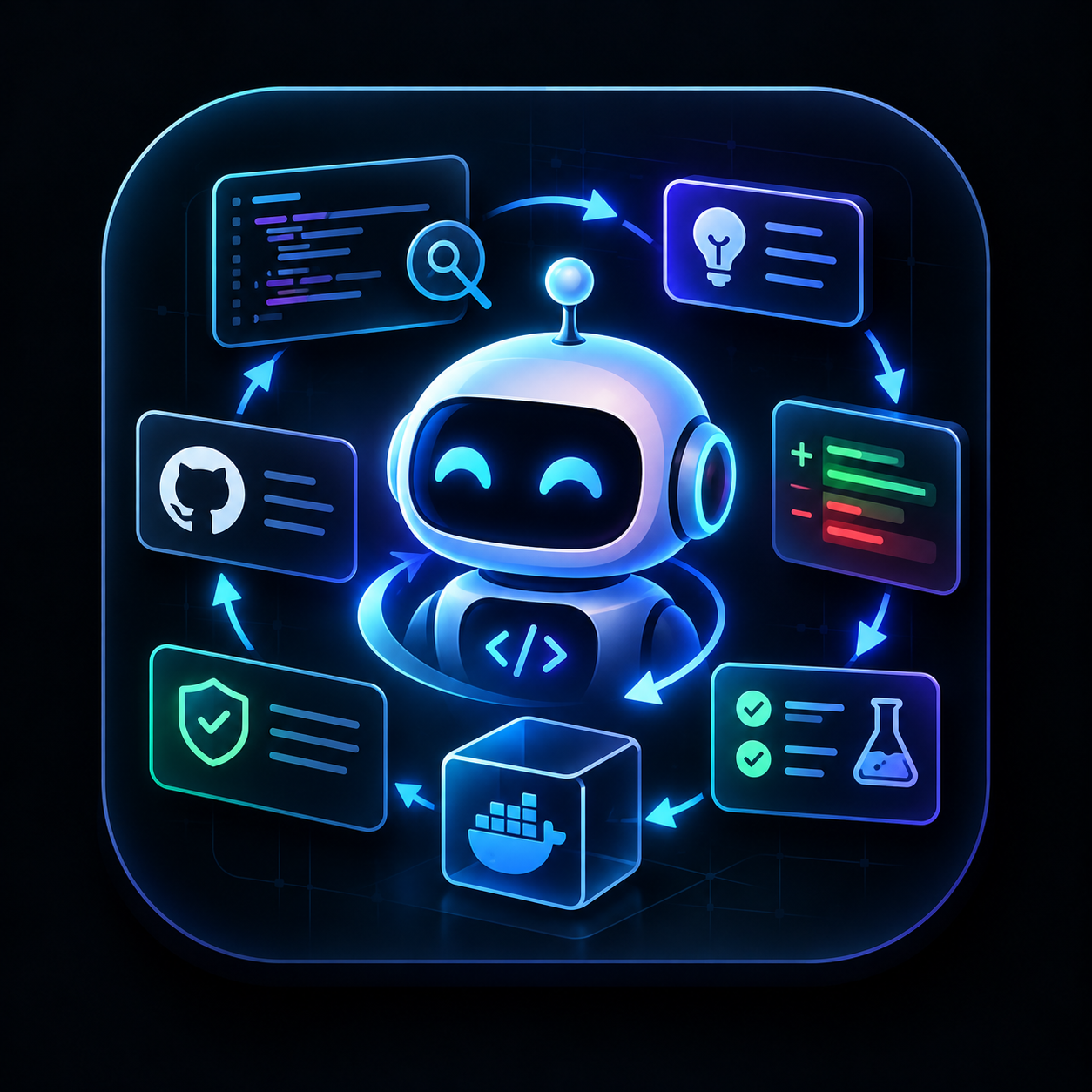
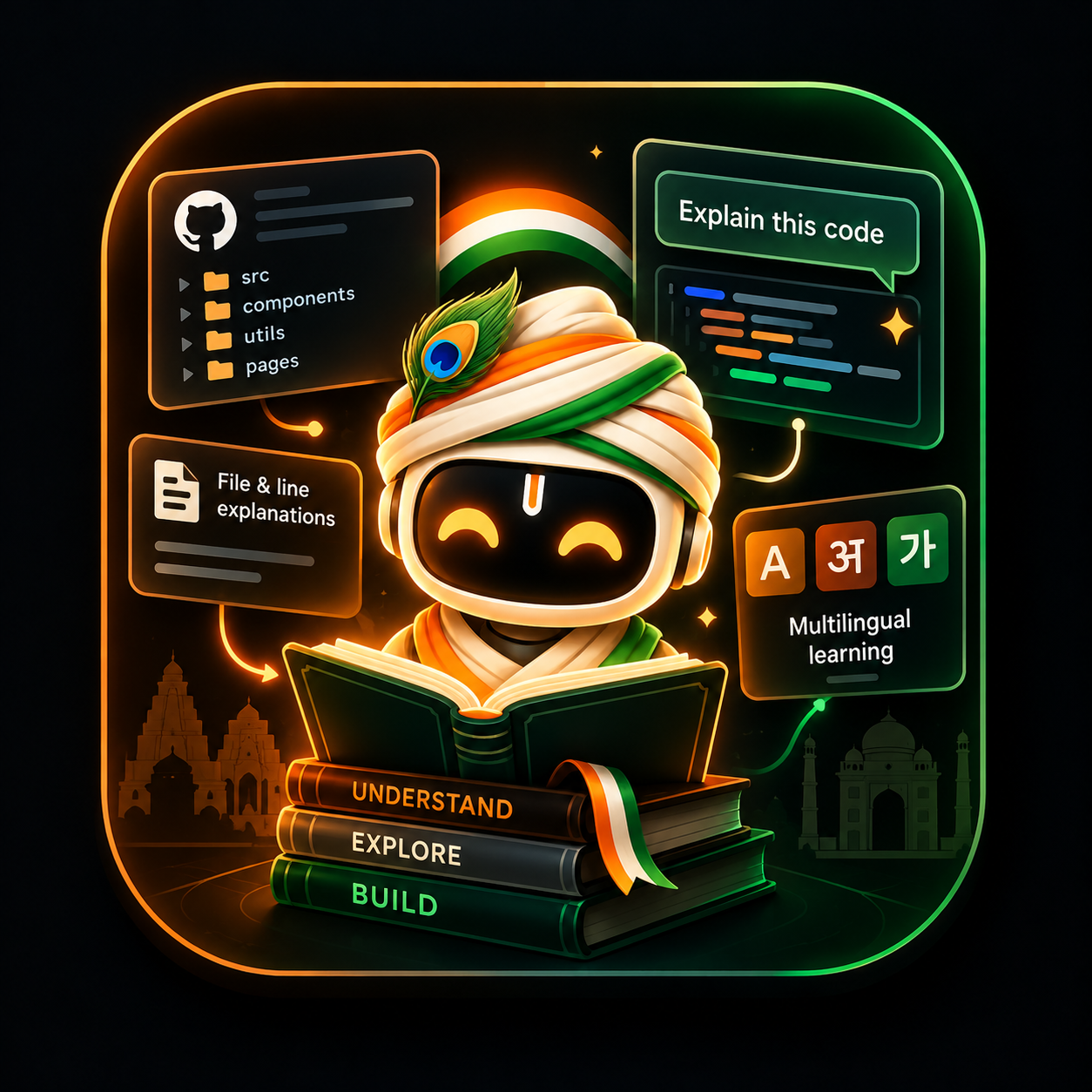
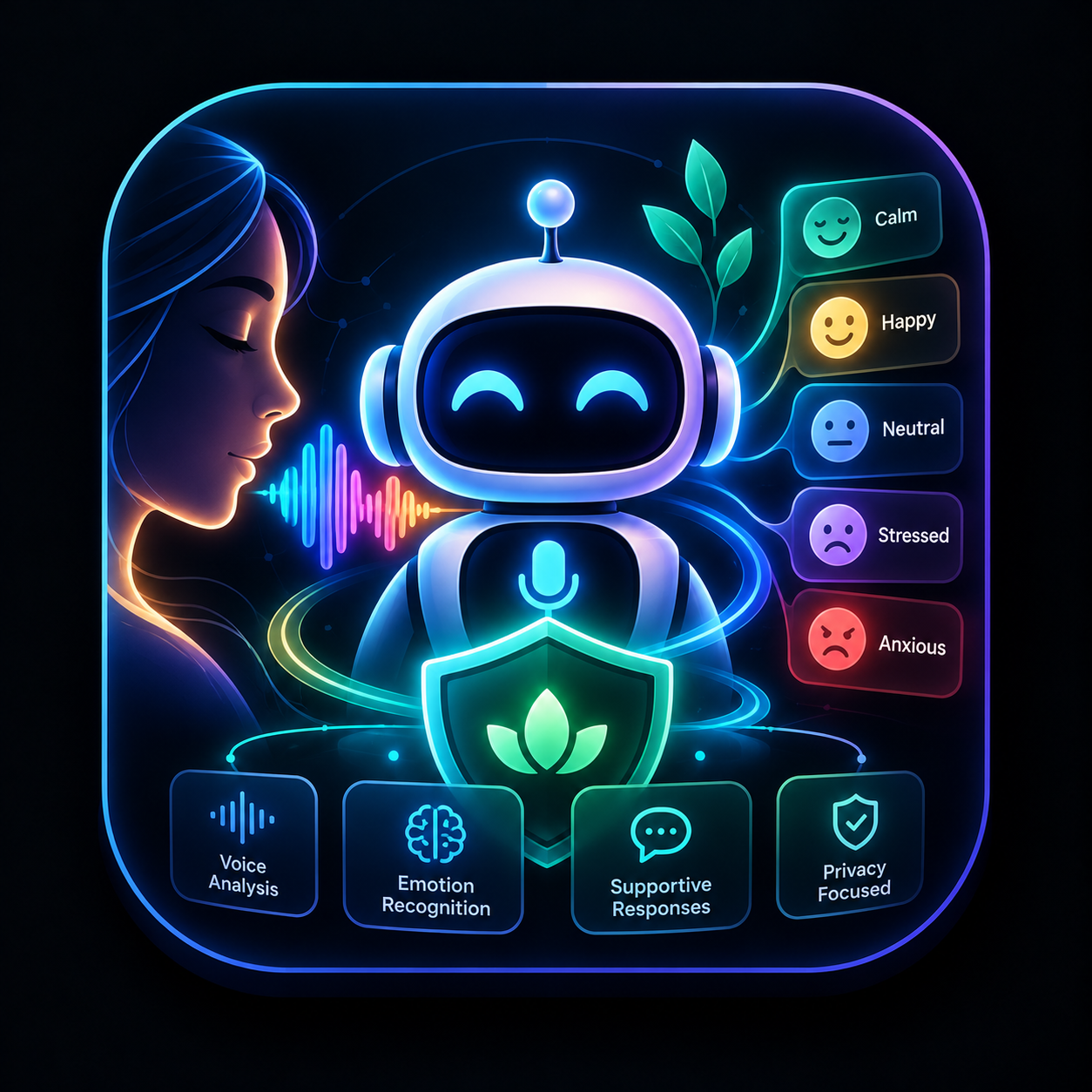
Five projects, one shared question — when does this break, and can we prove it won't?

03Philosophy

"Most people build AI to impress. I build AI to interrogate. A model that scores 99% but can't explain itself is not intelligence — it's a pattern with confidence. The most important question in AI is not "does it work?" but "when does it break, who does it hurt, and can we see why?""

Robustness is not a feature. Fairness is not optional. Explainability is the baseline.

04Engineering Mindset

How I think.

Every AI system I build follows this framework — not a rigid checklist, but a way of thinking that keeps the real problem in focus.

What is actually broken — not what someone asked me to fix.

Step 01 — Define the Real Problem

Most AI projects fail here. Someone asks for a model — I ask what decision that model is supposed to improve. If I cannot answer that, I do not start building.

Questions I ask
  • ?What human decision does this system change?
  • ?Who is affected if it gets it wrong?
  • ?Is this actually an AI problem or a process problem?
  • ?What does failure look like in the real world?
Proof

SilentBias — started with 'who is hurt by wrong predictions' · Voice Guardian — started with 'what does emotional support actually need'.

05Experience

Where I've shipped.

Education
B.Tech — Artificial Intelligence & Data Science
Chettinad College of Engineering, Karur
2023 – 2027 (Expected)Final Year
Aug 2025 – Nov 2025

Full-Stack Developer Intern

IBM Certification Program
  • →Built 8 full-stack applications within the program using React.js, Node.js, Express.js, and MongoDB.
  • →Designed REST APIs, tested at around 200 requests per minute in program workloads.
  • →Set up CI/CD pipelines and automated tests for the program projects.
  • →Collaborated in agile teams using Git-based version control and structured code reviews.
Jan 2026 – Feb 2026

Python Programming Intern

Codtech IT Solutions Pvt. Ltd.
  • →Completed 4 structured Python assignments covering core language constructs.
  • →Wrote and tested reusable Python scripts, focusing on correctness and clear execution flow.
  • →Participated in regular progress reviews and incorporated supervisor feedback.
06Technical Arsenal

What I reach for.

AI / Machine Learning

  • Machine Learning
  • Deep Learning
  • Computer Vision
  • NLP
  • TensorFlow
  • PyTorch
  • Sentence Transformers
  • FAISS

AI Robustness & Ethics

  • SHAP Explainability
  • Bias Detection
  • Fairness Metrics
  • Model Robustness
  • RAG Failure Analysis
  • Responsible AI

Cloud & Backend

  • AWS EC2
  • DynamoDB
  • S3
  • Amazon Bedrock
  • FastAPI
  • REST APIs
  • MongoDB
  • PostgreSQL
  • Redis
  • Neo4j

Languages & Tools

  • Python
  • JavaScript
  • React.js
  • Node.js
  • Docker
  • Git
  • CI/CD
  • Streamlit
07Active Study Stack

Currently learning.

Agentic AI & RAG Systems

RAG failure modes, autonomous agent safety, hallucination patterns in production.

Builds on the completed 120-day challenge

Advanced Mathematics for ML

Linear algebra, probability theory, and optimisation for deep learning foundations.

Ongoing · foundational

Korean Language

Vocabulary and reading comprehension, working toward TOPIK certification.

Ongoing

Cloud Architecture (AWS)

Scalable inference, serverless pipelines, cost optimisation for AI workloads.

Applied via Thenali AI
TamilNative
EnglishProfessional
KoreanLearning
08What I'm Looking For

Open to opportunities.

I'm actively seeking roles where AI is taken seriously — not just shipped fast. If you're working on systems that need to be robust, explainable, or fair, let's talk.

AI Research Intern

Open ↗

Model robustness, failure analysis, safety evaluation, responsible AI research.

RobustnessSafetyExplainability

ML Engineer Intern

Open ↗

Building and evaluating production-ready ML pipelines with real constraints.

TensorFlowPythonMLOps

Full-Stack AI Developer

Open ↗

End-to-end AI applications from model training to cloud deployment.

FastAPIAWSReact

Open Source Contributor

Open ↗

Contributing to AI fairness, robustness, and explainability tooling.

FairnessGitHubCommunity
Open to research collaborations and relevant opportunities
09Contact

Let's build something trustworthy.